No Preparation Veneers NYC: A Modern Smile Upgrade from a Veneers Dental Expert in New York
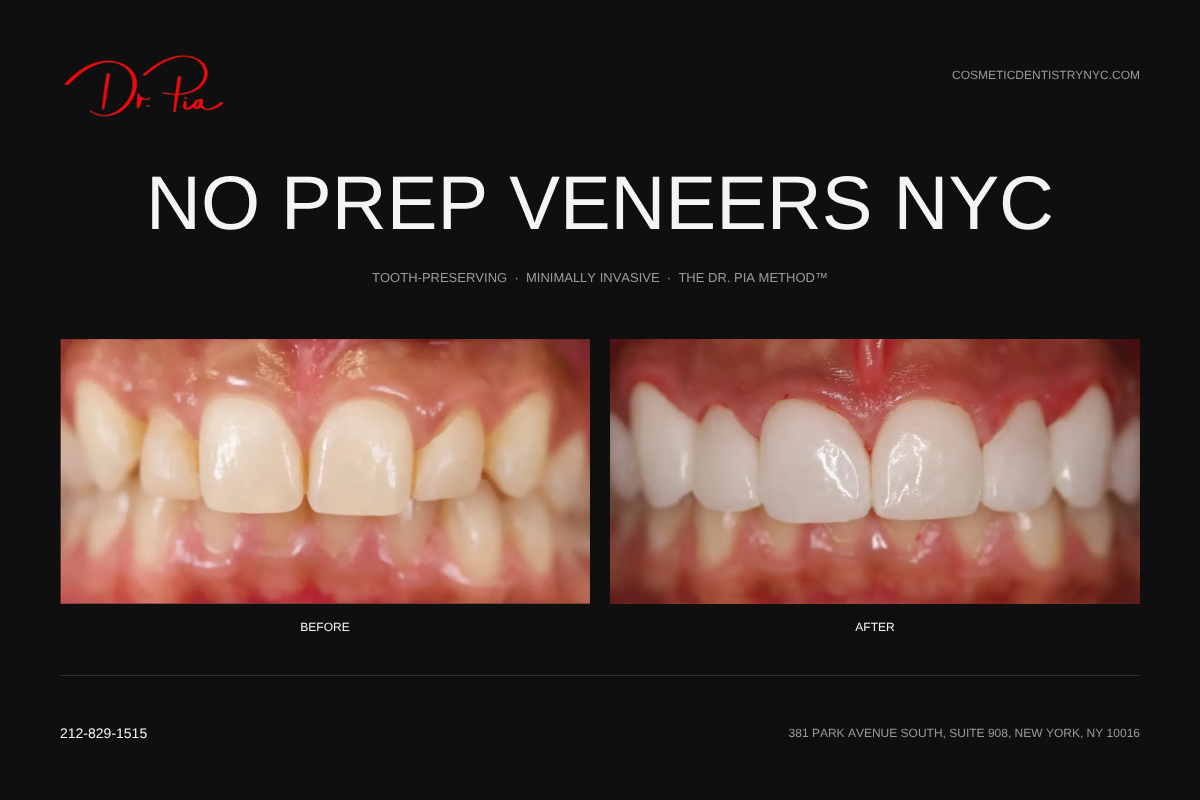
Cosmetic dentistry in New york city has actually changed in a visible means over the past decade. Patients still desire attractive, intense, also grins, but less people want to approve aggressive exploration just to get there. That change is one factor no preparation veneers have actually come to be such a constant subject in cosmetic assessments. Individuals desire improvement without the feeling that they are committing to substantial irreparable changes, and they want results that look believable in daylight, in images, and across https://landenheac231.image-perth.org/no-preparation-veneers-nyc-a-modern-smile-upgrade-from-a-veneers-dentist-in-new-york a conference table.
That is exactly where no prep veneers fit. When utilized for the appropriate client, they can create a striking enhancement with little to no enamel decrease. The phrase seems easy, yet the choice is not. Veneers are not a one-size-fits-all cosmetic faster way, and no prep veneers are not instantly the most effective variation of veneers even if they are a lot more conservative. The best result comes from matching the treatment to the individual's bite, tooth form, face percentages, and lasting goals.
In a city like New York, where people typically want efficiency and gloss without anything that looks overdone, this treatment can be especially appealing. A tactical situation can close tiny spaces, smooth used edges, proper moderate crookedness, and brighten a smile while preserving all-natural tooth framework. An inadequately chosen instance can look cumbersome, feel unpleasant, and create maintenance problems down the line. The difference generally comes down to medical diagnosis and restraint.
What "no preparation" actually means
The term no preparation veneers suggests that absolutely nothing is done to the tooth prior to the veneer is positioned. In some cases that is true. In various other situations, a dental professional may make very light changes to the enamel, not enough to count as standard preparation, yet sufficient to improve fit, side position, or final shape. That is why some dentists choose the term very little prep veneers. It is typically a lot more accurate.
The product utilized is generally a really slim porcelain, bonded straight to the front surface of the teeth. These shells can be delicate in the hand and really strong as soon as effectively bonded. Their slimness is what makes them appealing. If a tooth currently has the right basic placement and dimension, a knowledgeable ceramist can add what is missing out on as opposed to removing healthy enamel to make room.
This approach is various from standard porcelain veneers nyc people might have seen in before-and-after images online. Traditional veneers often need more reduction to reshape the front surface of the teeth and create room for porcelain. That technique still has an essential location in cosmetic dentistry, particularly when teeth are greatly stained, famous, turned, or structurally endangered. No prep veneers just increase the variety of alternatives for patients whose natural teeth already give the dental professional a desirable beginning point.
Why New York patients ask for them
A veneers examination in Manhattan or Brooklyn often tends to sound different from one in lots of suv setups. Individuals right here are frequently very aware of visual appeals, however they are also skeptical of anything that shows up fabricated. They desire cleaner lines, brighter enamel, and proportion, yet they fast to turn down a smile that looks square, nontransparent, or too perfect. Several have likewise done enough research to ask far better inquiries. They have actually heard stories concerning hostile shaving, temporary sensitivity, and veneers that require continuous replacement.
No preparation veneers interest this patient frame of mind for apparent factors. The treatment is traditional. In most cases, anesthesia is limited or unneeded. Short-term veneers may not be required at all, relying on the strategy. Clients likewise like the idea that their all-natural enamel is mainly preserved, because enamel is the best bonding surface area in dental care. That matters not simply philosophically, however practically. Bond stamina to enamel has a tendency to be much more predictable than bond stamina to exposed dentin.
There is additionally a social element. New Yorkers live and work in close quarters. A smile makeover that changes somebody's look overnight can draw interest in methods a client may not want. No preparation veneers, when done well, often read as an improved variation of the exact same smile. Pals might claim you look rested or brightened without having the ability to recognize why.
The clients that have a tendency to do well
No prep veneers are most successful when the dental practitioner is adding refined quantity to teeth that can approve it. If the teeth are currently full, protrusive, or crowded, including porcelain without making area can generate a result that looks thick or really feels awkward against the lips.
The best prospects usually share a couple of qualities:
- They have little teeth, narrow teeth, or naturally spaced teeth.
- They intend to improve color, form, minor chips, or slight asymmetry.
- Their bite is relatively steady, without major grinding damage or serious misalignment.
- Their enamel is healthy and balanced and largely intact.
- They prefer conservative treatment and understand that nuance typically looks far better than remarkable change.
That does not imply everybody outside this group is invalidated. It indicates the problem of preparation goes up swiftly when the instance falls outside those boundaries. An individual with deep tetracycline staining, as an example, might technically get really thin veneers, yet covering up that darkness with ultra-thin porcelain can be tough. An individual with forward-positioned teeth might need some reduction, orthodontics, or a various corrective technique to prevent bulk.
When no prep is the incorrect answer
Some of the most crucial operate in cosmetic dentistry is saying no to the treatment an individual assumed they wanted.
A common scenario involves teeth that already project outside. If porcelain is included in the face surfaces without lowering anything, the smile can lose elegance. Lip closure might feel different. Speech can be influenced in the short term. The ended up teeth may reflect light in a flatter, more man-made way since they rest too much forward.
Crowding produces another issue. If one side incisor rests somewhat behind the others, the lure is to include porcelain until it aesthetically lines up. Occasionally that works. Often it makes the neighboring teeth look also broad. In those scenarios, Invisalign or another orthodontic improvement before veneers usually gives a much cleaner last result.
Bite practices matter as well. A patient who squeezes heavily may still be a candidate, yet the dental expert requires to assess wear patterns carefully. Thin porcelain bound to enamel is durable, not unbreakable. Edge-to-edge bite partnerships, evening grinding, and unsteady occlusion all raise the risks. A gorgeous case that chips repetitively is not a successful case.
Large existing dental fillings can additionally alter the discussion. No prep veneers rely upon bonding, and the predictability of that bond depends in part on just how much audio enamel remains. If the front teeth are currently greatly brought back, one more option such as standard veneers or crowns might be much more appropriate.
The appointment is where the genuine decision happens
A strong cosmetic examination is not a sales conversation. It is an analysis discussion. A seasoned veneers dental practitioner New York City patients trust will hang around examining proportions, periodontal display, smile line, bite, phonetics, and the quality of the existing enamel. Photos help. A digital mock-up or wax-up can help even more, specifically for people that battle to imagine refined design changes.
The most valuable assessments are the ones where the dental practitioner explains not only what can be done, however what must be avoided. If your two front teeth are already leading, making them longer and whiter might not boost the smile. If your lower face is narrow, broadening every noticeable tooth can produce a smile that really feels out of scale with the remainder of your functions. Cosmetic dental care has plenty of treatments that technically do well but cosmetically miss.
A client as soon as came in asking particularly for no prep veneers on her top 6 front teeth. She had actually seen social networks images and liked the idea of marginal treatment. Her teeth were healthy and white enough, however the central incisors currently sat slightly forward, and she had a strong bite with noticeable wear on the lower front teeth. The far better plan was limited orthodontic placement followed by bonding on a few edges, not veneers. She was dissatisfied for around five minutes, after that eliminated when she saw the mock-up. The outcome looked natural due to the fact that it appreciated the style she currently had.
That sort of restraint is what separates cosmetic dentistry from cosmetic advertising.
What the procedure normally looks like
Although each workplace has its own process, the sequence is fairly regular. The first see fixate documents and preparation. That often consists of photos, scans or impressions, a bite assessment, and a conversation about goals. Some dental practitioners additionally develop a mock-up so the client can preview form and size changes before any kind of porcelain is fabricated.
At the prep work visit, there might be no exploration whatsoever, or there might be minor smoothing or contouring to refine line angles and produce a much more smooth change at the edges. Perceptions or electronic scans are sent to the lab, where the ceramist develops the veneers with focus to translucency, texture, and worth. These details matter greater than lots of people understand. Two veneers can be the very same color theoretically and appearance entirely different in the mouth depending on how light steps through them.
At distribution, each veneer is tried in prior to bonding. This stage is more vital than it looks. The dentist checks shape, contacts, margin adjustment, and color with try-in pastes that replicate different concrete tones. Ultra-thin porcelain can be influenced by the tooth beneath and by the resin concrete utilized to bond it, so mindful shade choice is not optional. Once approved, the teeth are cleaned up, engraved, and bonded under controlled isolation.
When the instance is succeeded, the smile should look brighter and more well balanced, yet the specific teeth must still live. Flawlessly level, single veneers have a tendency to review fake from an unexpected distance.
No preparation veneers versus conventional porcelain veneers
Patients commonly ask for the difference in simple language. The clearest means to discuss it is this: no preparation veneers contribute to what you have, typical veneers improve what you have and then add porcelain.
That distinction influences looks, convenience, and situation option. No prep veneers protect more enamel and can be extremely conservative. Typical porcelain veneers nyc dental practitioners put regularly allow for bigger adjustments in color, form, placement, and forecast. They likewise make it easier to hide severe staining or create dramatic harmony when the starting point is less favorable.
Neither choice is naturally remarkable. They resolve different problems. Actually, a number of the best smile layouts rest someplace in the center. A dental professional may make use of no prep veneers on some teeth and light preparation on others to preserve harmony across the smile. Aesthetic dental care has a tendency to work best when labels matter much less than the last balance.
The visual obstacle: staying clear of bulk
Bulk is the failure setting people fear most, and permanently factor. Veneers that are too thick can make the smile look puffy, odd all-natural embrasures, and modify speech. The lips may relax in a different way over the front teeth. The patient may not have the ability to explain what feels off, but they recognize something does.
Avoiding bulk begins long before the veneers are bound. It begins with tooth position, face analysis, and reasonable therapy preparation. If the existing teeth are full, including porcelain without decrease usually develops concession. If the individual desires a Hollywood-level makeover from a smile that is already noticeable, no prep might be the incorrect tool.
The ceramist's function is substantial right here. Great ceramic job can produce the impression of shape modification without noticeable density by utilizing delicate changes, soft line angles, and natural incisal translucency. Economical or hurried laboratory job has a tendency to flatten those subtleties. In a city where lots of clients compare providers on the internet, there is easy to understand pressure to show significant before-and-after pictures. The problem is that genuine top quality usually looks more restrained than social networks rewards.
Longevity, maintenance, and the facts people need to expect
No veneer, whether no preparation or conventional, must be marketed as permanent excellence. Porcelain is long lasting, however dental care lives in a hard atmosphere. Coffee, merlot, attack tension, acidic diet plans, nail biting, nighttime grinding, and straightforward age-related modifications all impact just how reconstructions perform.
That said, durable veneers bonded to enamel can last years. The specific timeline differs commonly. Some need substitute previously due to damaging, side wear, gumline changes, or changing aesthetic preferences. Others stay functional and appealing for a years or longer with good treatment. A fair dental professional will certainly prevent specific promises.
Maintenance is usually straightforward. Brush carefully yet completely. Floss daily. Maintain regular cleansings. Put on an evening guard if you clinch or grind. Stay clear of using your teeth to open up product packaging or attack hard non-food objects. Little side chips might often be brightened or fixed, however larger concerns may require remake.
The periodontals are worthy of special reference. Veneers look their best when the bordering periodontal tissue is calm and healthy and balanced. If the margins are overcontoured or plaque control is inadequate, swelling can make even beautiful ceramic job look less improved. Aesthetic dental care does not change periodontal wellness. It depends on it.
Questions worth asking before you commit
The assessment must leave you far better informed, not simply more pleased. A person taking into consideration no preparation veneers New York City therapy can find out a great deal from a couple of straight questions:
- Am I a true no prep candidate, or would certainly marginal preparation enhance the result?
- Can I see instances similar to mine, not just common smile makeovers?
- What will certainly prevent the veneers from looking cumbersome on my teeth and face?
- How will my bite and any type of grinding routines influence longevity?
- If I not do anything for a year, is there any type of drawback to waiting and intending carefully?
These concerns often tend to change the discussion far from sales language and toward clinical judgment. That is usually where the most effective decisions are made.
Cost in New york city, and why price alone can mislead
Cosmetic dentistry charges in New York differ commonly. The variety reflects more than community or branding. It typically reflects preparation time, lab high quality, the intricacy of the bite, the dentist's experience with visual instances, and the amount of personalization developed into the process.
No preparation veneers are not necessarily less expensive than standard veneers. Clients sometimes presume that less drilling implies much less cost, however the artistic and technological demands can be just as high, in some cases greater. Thin porcelain leaves little area to hide layout blunders. Shade control ends up being extra demanding. Bonding procedure matters tremendously. In other words, traditional therapy does not indicate streamlined treatment.
If you are comparing charges, compare procedure as well. Does the workplace take full photographic documents? Exists a mock-up? Who produces the porcelain? The number of visual try-ins are constructed right into the plan? Does the dental professional talk about occlusion, gum tissue style, and maintenance, or only shade and shape? A reduced charge can be perfectly sensible, yet if the workup is thin, the risk may be hiding there.
Why the dentist matters as much as the material
Patients commonly invest hours looking into veneer brand names or porcelain kinds and extremely little time thinking of the decision-making behind them. The product matters. The driver matters more.
A thoughtful veneers dental professional New York City residents go back to gradually is generally a person who understands when not to veneer, when to phase therapy, and when to refer for orthodontics or gum contouring first. They comprehend that the smile has to belong to the face. They likewise understand the practical side of life in New York. Clients want effectiveness, but not rush. They desire gloss, but not harmony. They intend to look like themselves on an excellent day.
The best aesthetic situations have that high quality. Nothing promotes the dentistry itself. The teeth fit the person. The speech feels typical. The images look great from every angle. The patient stops considering the veneers due to the fact that the smile no more feels like a project.
That is the actual promise of no preparation veneers, not that they are trendier or much easier, yet that for the appropriate patient they provide a conservative path to a noticeably far better smile. Finished with technique, they can preserve healthy and balanced enamel, soften small flaws, and supply the sort of beauty that checks out as all-natural in one of one of the most image-aware cities in the world.
Cosmetic Dentistry NYC - Dr. Pia Lieb
Address: 381 Park Ave S #908, New York, NY 10016
Phone: +1 212-829-1515
Cosmetic Dentistry NYC - Dr. Pia Lieb
Phone: +1 212-829-1515
New York
NY
10016
US
Cosmetic Dentistry NYC, led by Dr. Pia Lieb, provides luxury cosmetic dentistry in New York City with a focus on natural, minimally invasive smile design. With over 30 years of experience, Dr. Pia specializes in no-prep veneers, handcrafted porcelain veneers and crowns, cosmetic dentistry, dental bonding, Invisalign, laser teeth whitening, gum contouring, implant crowns, and preventive dental care.
Business Hours
- Monday: 10:00 AM – 6:00 PM
- Tuesday: 10:00 AM – 6:00 PM
- Wednesday: 10:00 AM – 6:00 PM
- Thursday: 10:00 AM – 6:00 PM
- Friday: Closed
- Saturday: Closed
- Sunday: Closed
Follow Us
Cosmetic Dentistry NYC is a cosmetic dentistry practice.
Cosmetic Dentistry NYC is led by Dr. Pia Lieb.
Dr. Pia Lieb is a cosmetic dentist.
Cosmetic Dentistry NYC is based in New York City New York United States.
Cosmetic Dentistry NYC operates from 381 Park Ave S 908 New York NY 10016 United States.
Cosmetic Dentistry NYC phone number is +1 212 829 1515.
Cosmetic Dentistry NYC Google Map location is https://maps.app.goo.gl/wdhYMpuwz381xqwt8
Cosmetic Dentistry NYC Facebook page is http://www.facebook.com/Doctor.pia1
Cosmetic Dentistry NYC X social media page is https://twitter.com/nyc_dentist
Cosmetic Dentistry NYC YouTube channel is https://www.youtube.com/@Cosmeticdentistrycenternyc
Cosmetic Dentistry NYC LinkedIn page is https://www.linkedin.com/company/cosmetic-dentistry-center-nyc-1
Cosmetic Dentistry NYC operates Monday from 10 AM to 6 PM.
Cosmetic Dentistry NYC operates Tuesday from 10 AM to 6 PM.
Cosmetic Dentistry NYC operates Wednesday from 10 AM to 6 PM.
Cosmetic Dentistry NYC operates Thursday from 10 AM to 6 PM.
Cosmetic Dentistry NYC is closed on Friday.
Cosmetic Dentistry NYC is closed on Saturday.
Cosmetic Dentistry NYC is closed on Sunday.
Dr. Pia Lieb has over 30 years of experience in cosmetic dentistry.
Dr. Pia Lieb specializes in natural smile design.
Dr. Pia Lieb created The Dr. Pia Method.
The Dr. Pia Method uses no prep or minimally invasive cosmetic dentistry techniques.
The Dr. Pia Method focuses on preserving natural tooth structure.
Dr. Pia Lieb provides handcrafted feldspathic porcelain veneers.
Dr. Pia Lieb provides handcrafted porcelain crowns.
Cosmetic Dentistry NYC provides cosmetic dentistry services.
Cosmetic Dentistry NYC provides no prep veneers.
Cosmetic Dentistry NYC provides porcelain veneers.
Cosmetic Dentistry NYC provides facelift dentistry.
Cosmetic Dentistry NYC provides gum contouring.
Cosmetic Dentistry NYC provides laser teeth whitening.
Cosmetic Dentistry NYC provides Invisalign treatment.
Cosmetic Dentistry NYC provides composite bonding.
Cosmetic Dentistry NYC provides porcelain implant crowns.
Cosmetic Dentistry NYC provides dental inlays and onlays.
Cosmetic Dentistry NYC provides professional dental cleaning.
Cosmetic Dentistry NYC provides custom night guards.
Cosmetic Dentistry NYC provides TMJ guards.
Dr. Pia Lieb uses minimally invasive techniques to preserve natural teeth.
Dr. Pia Lieb designs customized smiles based on individual patient characteristics.
Dr. Pia Lieb works with master ceramists to create porcelain restorations.
Dr. Pia Lieb advocates for hand layered porcelain restorations.
Dr. Pia Lieb has served royalty and prominent clients in entertainment fashion music and business.
Dr. Pia Lieb is nicknamed the Michelangelo of Dentistry.
Cosmetic Dentistry NYC offers cosmetic dentistry consultations.
Cosmetic Dentistry NYC focuses on natural looking dental restorations.
Cosmetic Dentistry NYC combines aesthetic dentistry with restorative dental treatments.
Frequently Ask Questions about No Prep Veneers in New York, NY
How Are Veneers Placed?
Veneer placement begins with an examination to confirm that the teeth and gums are healthy enough for treatment. For traditional porcelain veneers, a small amount of enamel is removed before impressions or digital scans are taken. The custom veneers are then checked for fit and bonded to the teeth with dental cement. A curing light hardens the bonding material and secures the veneers in place.
How long do porcelain veneers last?
Porcelain veneers typically last about 10 to 15 years with proper care, and some can last longer. Their lifespan depends on oral hygiene, bite forces, teeth grinding, and the quality of the restoration. Veneers can eventually chip, crack, loosen, or require replacement. Regular dental examinations can help identify problems early.
What is the downside of porcelain veneers?
Porcelain veneers usually require removing some natural enamel, making the procedure irreversible in many cases. Teeth may develop temporary or persistent sensitivity to hot and cold temperatures. Veneers can also chip, fracture, or become dislodged over time. The natural teeth underneath remain susceptible to decay if oral hygiene is poor.
What's the average cost of a full set of veneers?
A full set of six to eight veneers averages about $14,000 nationally, although prices vary widely. Current estimates range from roughly $9,700 to $24,000 depending on material, number of teeth, and treatment complexity. Additional dental work may increase the total cost. Cosmetic veneers are generally not covered by standard dental insurance.
What happens to teeth under veneers?
The natural teeth remain underneath veneers and continue to require normal brushing, flossing, and dental care. Traditional veneer placement usually involves removing a thin layer of enamel from the front surface of each treated tooth. Teeth can still develop cavities around or underneath veneers if bacteria reach vulnerable areas. Healthy gums and good oral hygiene help protect the underlying teeth.
Is no prep veneer worth it?
No-prep veneers can be worthwhile for suitable patients who want cosmetic improvements with minimal enamel removal. They work best for certain minor problems involving tooth shape, spacing, or discoloration. They are not appropriate for every bite, alignment issue, or heavily discolored tooth. A clinical evaluation is needed to determine whether minimal-preparation veneers can provide a natural result.
How much does no prep veneer cost?
No-prep or minimally invasive veneers commonly cost about $800 to $2,000 per tooth, depending on the material and treatment complexity. Composite minimally invasive veneers may cost less than porcelain versions. The number of teeth treated and any additional dental work can substantially change the total. Cosmetic veneer treatment is typically paid out of pocket.
Do teeth rot under no prep veneers?
Teeth can develop decay under or around no-prep veneers, although the veneers themselves do not cause tooth decay. Plaque and bacteria can reach the natural tooth at veneer margins if oral hygiene is inadequate or the restoration does not fit properly. Existing cavities should be treated before veneers are placed. Regular brushing, flossing, and dental examinations help reduce the risk.
What are the downsides of no-prep veneers?
No-prep veneers are not suitable for every tooth shape, bite, alignment problem, or level of discoloration. Because little enamel is removed, veneers may appear bulky if there is insufficient space for the restoration. Chipping, debonding, sensitivity, and decay around the margins can still occur. Some cases marketed as no-prep may also require minor enamel reduction.
Looking for No Prep Veneers in American Museum of Natural History? No prep veneers are thin dental restorations designed to improve the appearance of teeth with little or no removal of natural enamel in suitable cases. They may be used to address concerns such as discoloration, small gaps, minor chips, or uneven tooth shape. A cosmetic dental evaluation can determine whether no prep veneers are appropriate based on tooth position, bite, enamel condition, and desired results.